

High-Dose Vitamin C Infusion
We test your G6PD status before your first session.
5500 per session • Assessment and screening required
BOOK AN ASSESSMENTThe High-Dose Vitamin C Infusion at Integra Essenza delivers intravenous ascorbic acid at doses above standard micronutrient formulations. G6PD deficiency screening and renal function testing are required before the first session. The infusion is formulated by a physician after assessment. ₱5,500 per session, administered in-clinic under physician supervision.
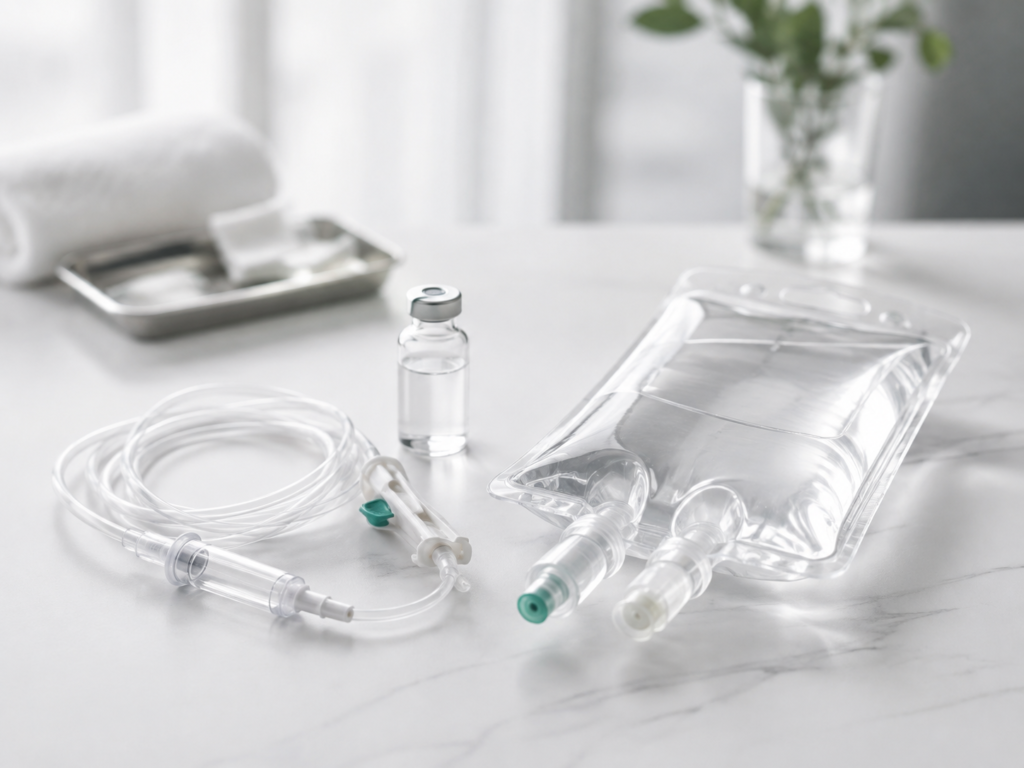
High-dose intravenous ascorbate, meaning quantities well above what any supplement or standard vitamin drip delivers, given in-clinic under physician supervision over roughly 60 to 90 minutes.
This carries screening requirements the others don’t, and we’d rather lead with those than bury them.
Two tests happen before a first session. G6PD status, because in people with G6PD deficiency high-dose intravenous ascorbate can trigger red cell breakdown, and deficiency isn’t uncommon here. And renal function, because ascorbate is metabolized partly to oxalate, which matters for the kidneys at high doses. Both tests are routine and neither is expensive.
We’re not describing what this infusion is for beyond micronutrient support at dose. High-dose intravenous ascorbate has been studied in several contexts, and how those uses may be described here is something we’re clarifying formally rather than assuming. When we have that answer in writing, this page will say more.
1. Assessment. Consultation, current labs including renal function, full medication and supplement list.
2. Screening. G6PD testing before any first session, including for patients who’ve had high-dose C elsewhere.
3. Formulation and decision. Dose, rate and cadence set by the physician. If screening returns a result that makes this inappropriate, we don’t proceed and you’re told why.
4. Sessions with monitoring. 60 to 90 minutes in-clinic, physician-supervised, with hydration guidance and periodic recheck.
| Component | Category |
|---|---|
| Ascorbic acid | High dose, set by assessment |
| Balanced fluid base | Hydration and dilution |
| Buffering agents | As required by formulation |
Three worth understanding before you book. In G6PD deficiency, high-dose ascorbate can cause red cell breakdown, which is why we screen everyone. Ascorbate is partly metabolized to oxalate, which raises kidney stone risk in susceptible people, so renal function is checked and hydration guidance is part of the protocol. And high doses can interfere with some glucose meter readings, which matters if you monitor at home.
More commonly: cannula-site irritation, and light-headedness or thirst during infusion, both usually rate-related.
₱5,500 per session, 60 to 90 minutes plus monitoring. Screening costs are separate and quoted before you commit. Includes physician supervision, preparation, administration and monitoring.
High-dose intravenous ascorbate has been the subject of genuine clinical research, and also of a great deal of marketing that runs ahead of what the research shows. Those two bodies of material get mixed together constantly online.
We won’t characterize what this does for any condition. What we do is screen properly, dose conservatively, document what was decided, and write to your treating physician.
Click here if you’re arranging this for someone else
It’s an enzyme. People deficient in it can have red cells break down when exposed to certain substances, and high-dose intravenous vitamin C is one of them. Deficiency is common enough here that we screen everyone.
High doses can raise oxalate, which increases stone risk in susceptible people. That’s why renal function is checked first and hydration guidance is part of the protocol.
We’d still test. It costs little and it changes what’s safe to give.
That’s a question for your treating specialist first, and we’d want to speak with them.
No. Nothing here replaces prescribed treatment.
Because we’re waiting on a written regulatory answer, and we’d rather say less than say something we’d have to retract.
Set at assessment, with periodic recheck of renal function.